


Colombian Coffee: Flavor, Regions & What Makes It Special

Colombian coffee is known for being sweet, balanced and easy to love, with notes of caramel, chocolate, nuts and red fruit, plus a gentle, bright acidity. Colombia is the world's third-largest coffee producer and one of the biggest sources of washed arabica coffee. It's grown by more than half a million families, mostly on small farms high in the Andes mountains, and thanks to the country's many microclimates, fresh coffee is being harvested somewhere in Colombia almost every month of the year.
Jump to: flavor · growing regions · how it's grown · varieties · Supremo vs Excelso · how to brew it · quick answers

Photo: Cafe Imports
What Does Colombian Coffee Taste Like?
Colombian coffee is the classic "coffee-flavored coffee" for a lot of people: familiar and comforting, but with enough sweetness and brightness to stay interesting. Common tasting notes include:
- Sweet: caramel, brown sugar, panela, honey
- Chocolate and nuts: milk chocolate, cocoa, almond, hazelnut
- Fruit: red apple, cherry, orange, red berries
- Body: medium and smooth
- Acidity: bright but gentle, never sharp
Because it's so balanced, Colombian coffee works with almost every brew method and roast level. It's also one of the most common coffees in espresso blends, because it adds sweetness and body without overpowering other coffees. Learn more about flavor in our guide to coffee tasting notes.
Colombian Coffee Growing Regions
Colombia's coffee grows along three ranges of the Andes, mostly between about 1,200 and 2,000 meters (roughly 3,900 to 6,600 feet), with some farms in the south going even higher. Each region has its own climate and its own style:
| Region | Typical flavors | Known for |
|---|---|---|
| Huila | Caramel, red fruit, citrus, sweet and bright | Colombia's largest coffee-producing region and a favorite of specialty roasters |
| Nariño | Citrus, red fruit, floral, juicy acidity | Some of Colombia's highest farms, near the border with Ecuador |
| Cauca | Caramel, floral, citrus, balanced | High-altitude farms around Popayán with steady, mild weather |
| Tolima | Red fruit, chocolate, sweet | Small farms with fruity, complex coffees |
| Antioquia | Chocolate, nuts, mild acidity | One of the oldest and largest coffee regions, known for classic, balanced cups |
| Coffee Axis (Caldas, Quindío, Risaralda) | Caramel, nuts, balanced | The historic heart of Colombian coffee and a UNESCO World Heritage cultural landscape |
| Santander and the Sierra Nevada | Chocolate, nuts, heavier body, low acidity | Northern regions, often shade-grown, with rich, mellow coffees |
As a rule of thumb, coffees from the south, like Huila and Nariño, taste brighter and fruitier. Coffees from the north taste rounder and more chocolatey.
How Colombian Coffee Is Grown and Processed
Most Colombian coffee comes from small family farms, many of them just a few acres, on steep mountain slopes where coffee is still picked by hand. Colombia's coffee growers are represented by the National Federation of Coffee Growers (Federación Nacional de Cafeteros), founded in 1927, which also created the famous Juan Valdez character to promote Colombian coffee around the world.
Unlike in many countries, where farmers sell cherries to a central mill, a lot of Colombian farmers process their own coffee at home:
- Pick: ripe cherries are hand-picked, often over several passes as they ripen.
- Depulp: a small machine on the farm removes the skin and fruit.
- Ferment and wash: the beans ferment in tanks overnight or longer, then get washed clean.
- Dry: the beans dry on patios, rooftops or in covered "parabolic" dryers that protect them from the rain.
That's why most Colombian coffee is washed, which gives it that clean, sweet, balanced taste. More Colombian farmers are also experimenting with honey, natural and anaerobic processing. Learn more in our guides to coffee processing methods and experimental processing.
When is Colombian coffee harvested?
Because Colombia sits close to the equator and has so many microclimates, different regions harvest at different times. Many areas have a main harvest and a smaller second harvest called the mitaca. That means fresh Colombian coffee is available nearly year-round. See our guide to coffee seasonality.
Colombian Coffee Varieties
All Colombian coffee is arabica. The most common varieties are:
- Castillo: developed by Colombia's coffee research center, Cenicafé, to resist coffee leaf rust. It's now the most widely planted variety in the country.
- Caturra: a compact, high-quality variety that was once the most common in Colombia.
- Colombia: an older rust-resistant variety developed in the 1980s.
- Typica and Bourbon: classic heirloom varieties still grown on some farms.
- Specialty varieties: more farms now grow Pink Bourbon, Gesha and other rare varieties for high-end specialty coffee. Read more in our post on coffee varieties like Gesha and Bourbon.
What Do Colombian Supremo and Excelso Mean?
You'll often see "Supremo" or "Excelso" on bags of Colombian coffee. These are size grades, not flavor or quality grades:
- Supremo: the largest beans, screen size 17 and up.
- Excelso: slightly smaller beans, usually screen size 15 to 16.
Bigger beans don't automatically taste better. Most specialty roasters care more about the farm, region, variety and processing than the bean size, which is why you'll see a region like Huila or a farm name on specialty Colombian coffee instead.
Colombian vs. Ethiopian Coffee
These are two of the most popular coffee origins, and they're very different. Colombian coffee is sweet and balanced, with caramel, chocolate and gentle fruit. Ethiopian coffee is brighter and more floral, with citrus, berry and tea-like flavors. They also go great together, which is exactly why our Abstract Blend combines a Colombian coffee from Huila with a natural Ethiopian from Guji.
How to Brew Colombian Coffee
Colombian coffee is one of the most forgiving coffees to brew, so it tastes great almost any way you make it:
- Drip: a medium roast Colombian makes a smooth, sweet everyday pot. Start with a 1:16 ratio, about 22 grams of coffee for a 12 oz mug.
- Pour over: a lighter roast from Huila or Nariño shows off red fruit and citrus. See our pour over guide.
- Espresso: Colombian coffee adds sweetness and body to espresso and holds up beautifully in lattes. See how to make espresso at home.
- Cold brew: its chocolate and caramel notes make a smooth, mellow cold brew. Try our cold brew recipe.
For more tips on getting the most out of any coffee, read how to make better coffee at home.
Our Colombian Coffees
We roast to order in small batches in St. Paul and print the roast date on the bottom of every bag. Colombian coffee is in some of our most popular coffees:
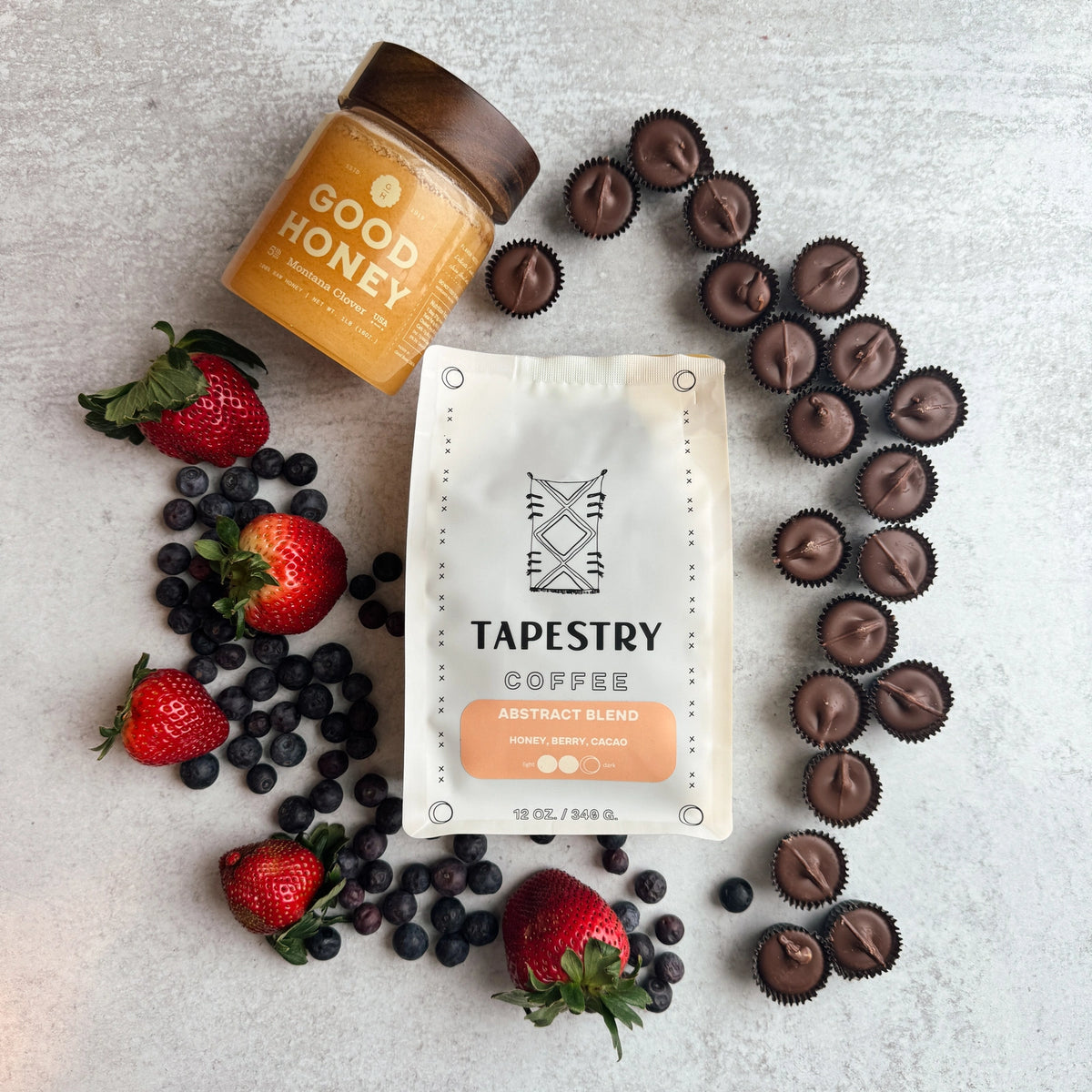
- Abstract Blend combines coffee from smallholder farms in Huila, Colombia with a natural from Kayon Mountain Farm in Guji, Ethiopia. Notes of honey, berry and cacao. It's the espresso we pull every day at our Lakeville coffee shops.
- Loom Blend is a blend of washed coffees from Nariño, Colombia, Mexico and Guji, Ethiopia. Rich chocolate, sweet toffee and a nutty depth. It's the drip coffee we pour every day.
- Decaf Colombia has notes of dried cherry, brown sugar and clove, and pulls a sweet, full-bodied decaf espresso.
Not sure which fits you? Take our 60-second coffee quiz.
Quick Answers
Why is Colombian coffee so popular?
It's sweet, balanced and easy to drink, and Colombia produces a lot of high-quality washed arabica. Decades of marketing, including the Juan Valdez character, also made "100% Colombian" a familiar sign of quality.
What does Colombian coffee taste like?
Usually sweet and balanced, with caramel, chocolate and nutty notes, a medium body and gentle, fruity acidity. Coffees from southern regions like Huila and Nariño taste brighter and fruitier.
Is Colombian coffee strong?
It has a smooth, medium body rather than a heavy or bitter taste. Its caffeine is about the same as other arabica coffees. How strong your cup tastes depends more on the roast and how much coffee you use.
Is Colombian coffee arabica?
Yes. Colombia grows only arabica coffee.
Is Colombian coffee low acid?
It has a gentle, pleasant acidity, softer than most Ethiopian or Kenyan coffees. For an even mellower cup, choose a medium or darker roast, or a coffee from northern Colombia.
What is Colombian Supremo coffee?
Supremo is the largest bean size grade for Colombian coffee, screen size 17 and up. It describes bean size, not flavor.
What is Huila coffee?
Coffee from the Huila region in southern Colombia, the country's largest coffee-producing region. Huila coffees are known for being sweet and bright, with caramel and red fruit notes.
Is Colombian coffee good for espresso?
Yes. It's one of the most popular coffees for espresso because it's sweet, smooth and holds up well with milk.
When is Colombian coffee harvested?
It depends on the region. Many areas have a main harvest and a smaller second harvest called the mitaca, so fresh Colombian coffee is available most of the year.


