


Tapestry Coffee BlogEspresso
How to Make Espresso at Home: Recipe, Steps and Fixes

Updated October 2026
To make espresso at home, grind 18 grams of fresh coffee fine, tamp it level in your portafilter, and pull about 36 grams of espresso in 25 to 30 seconds with water around 200°F. That 1:2 ratio is the starting recipe most cafés use. If the shot tastes sour, grind finer. If it tastes bitter, grind coarser. Change one thing at a time until it tastes sweet and balanced.
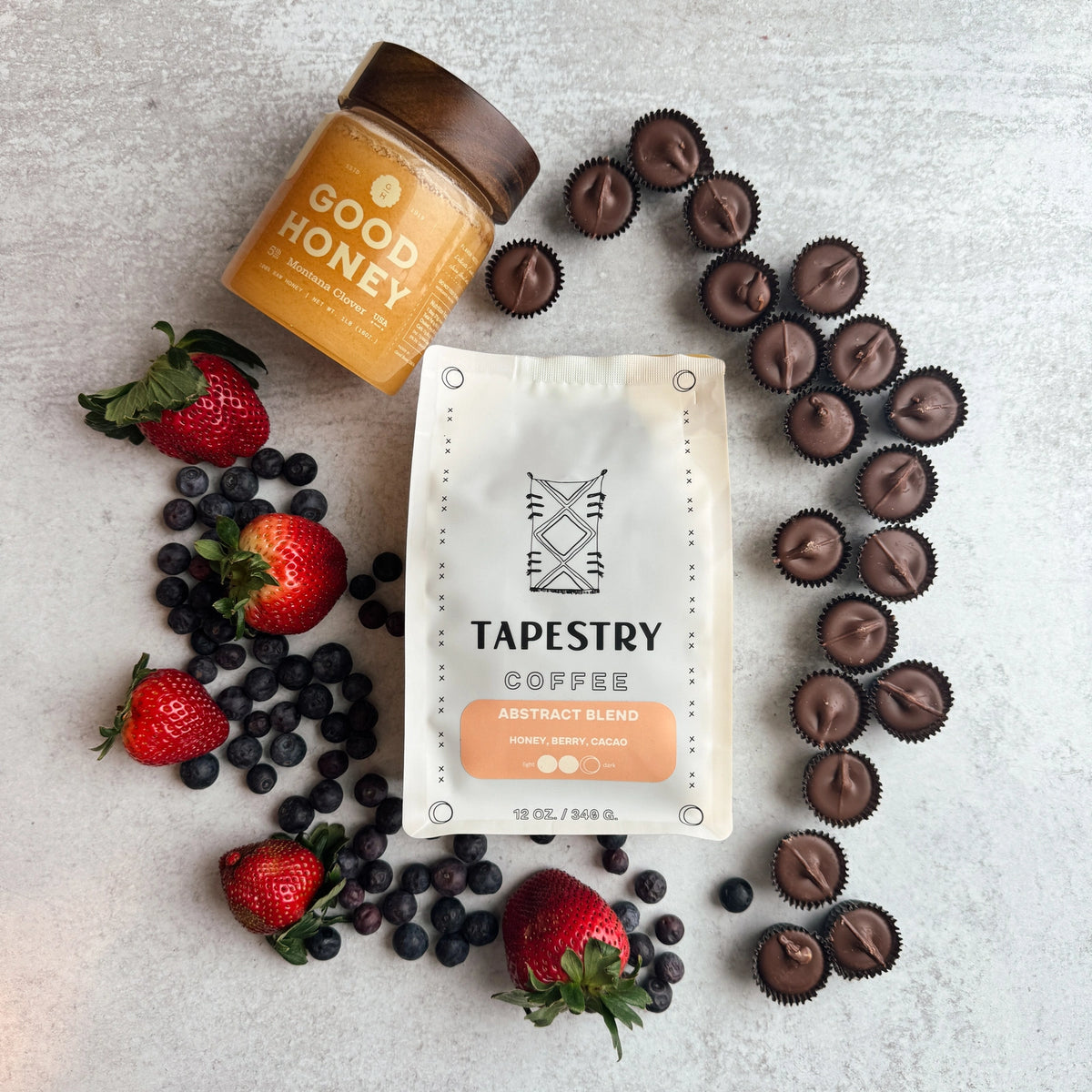
The coffee matters as much as the machine. Our Abstract Blend is the espresso we pull every day in our Lakeville cafés, with notes of honey, berry and cacao. Like every coffee we sell, it's roasted to order at our roastery in St. Paul, Minnesota.
The Basic Espresso Recipe
| Starting point | Why it matters | |
|---|---|---|
| Dose (dry coffee) | 18 g for a double basket | Use what your basket is made for. Many home machines use 16 to 19 g. |
| Yield (espresso in the cup) | 36 g (a 1:2 ratio) | Weigh it. Measuring by volume is thrown off by crema. |
| Time | 25 to 30 seconds | Counted from when you start the pump. |
| Water temperature | 195 to 205°F (about 93°C) | Hotter extracts more and helps lighter roasts. Cooler tames bitterness. |
| Grind | Fine, like powdered sugar with a little grit | The main thing you adjust to change the time. |
Want a stronger, thicker shot? Try a ristretto (1:1.5, about 27 g out). Want a longer, lighter one? Try a lungo (1:3, about 54 g out).
How to Make Espresso at Home, Step by Step
- Turn on your machine early. Let it heat for at least 15 to 20 minutes, with the portafilter locked in so it heats up too.
- Weigh and grind your coffee. Weigh 18 g of beans and grind right before you brew. Ground coffee goes stale in minutes.
- Distribute. Break up clumps and level the grounds in the basket. A distribution tool or a thin needle (a WDT tool) helps a lot.
- Tamp level. Press straight down until the coffee stops compressing. Consistency matters more than force, and a level tamp matters most.
- Flush and lock in. Run a second of water through the group head, then lock in the portafilter and put a cup on a scale.
- Pull the shot. Start the pump and a timer. Stop at about 36 g.
- Taste and adjust. Use the troubleshooting table below and change one thing for the next shot.
For a full walkthrough on new coffees, see how to dial in espresso. Using a Breville? We have a Breville espresso guide too.
What Good Espresso Should Taste and Look Like
Taste: a good shot is sweet first, with balanced acidity and a pleasant bitterness like dark chocolate, never sharp or harsh. It should feel thick and syrupy, and the flavor should linger after you swallow. You should be able to pick out the coffee's notes, like caramel, chocolate, fruit or nuts.
Look: after a few seconds, espresso should start dripping, then flow in a steady stream like warm honey. It starts dark brown and turns golden as it goes. When the stream turns pale and thin (called "blonding"), the shot is almost done. In the cup you'll see a layer of tan to reddish-brown crema on top.
About crema: crema looks great, but it isn't proof of a good shot. Very fresh coffee makes a lot of it, stale coffee makes very little, and robusta makes more than arabica. Always go by taste.
Espresso Troubleshooting
| Problem | Likely cause | Fix |
|---|---|---|
| Tastes sour, salty or thin | Under-extracted | Grind finer, pull a little more yield, or raise the temperature |
| Tastes bitter, harsh or dry | Over-extracted | Grind coarser, pull a little less yield, or lower the temperature |
| Runs too fast (under 20 seconds) | Grind too coarse or dose too low | Grind finer, check your dose |
| Runs too slow (over 35 seconds) or drips | Grind too fine or dose too high | Grind coarser, check your dose |
| Sour and bitter at the same time | Channeling (water finds a weak spot in the puck) | Improve distribution and tamp level |
| Little or no crema | Stale coffee or too coarse a grind | Use fresher beans and grind finer |
| Tastes flat even when the numbers are right | Old coffee or a dirty machine | Use fresh beans and backflush your machine |
Change only one thing at a time. If you change the grind and the dose together, you won't know which one helped.
Choosing Coffee for Espresso
- Freshness: espresso is the brew method that's most sensitive to freshness. Use coffee that's at least 5 to 7 days off roast, so the extra gas has time to escape, and within about 4 weeks of roasting. Look for a roast date on the bag.
- Roast level: medium roasts are the easiest to dial in and taste great straight or in milk drinks. Light roasts can be stunning but need a finer grind and hotter water. Dark roasts are forgiving and bold, but can turn bitter quickly.
- Blend or single origin: blends are built to taste balanced and consistent as espresso, which makes them easier day to day. Single origins can be more exciting but are harder to dial in.
Our Abstract Blend is built for espresso, and our Fringe Blend is a great dark roast option for lattes. Curious why your home espresso still doesn't taste like a café's? Read 5 reasons your home espresso doesn't taste like a coffee shop.
Water, Grinder and Cleaning
- Water: espresso is mostly water, so use filtered water. Very hard water builds up scale in your machine. Very soft or distilled water makes flat espresso.
- Grinder: a good burr grinder matters more than an expensive machine. Espresso needs a fine, even grind and small adjustments. See our best home espresso grinders.
- Cleaning: rinse the portafilter and wipe the group head after every session. Backflush with water daily (if your machine allows it) and with espresso machine cleaner weekly. Descale every 1 to 3 months depending on your water. Old coffee oils taste rancid and will make any coffee taste bad.
Shopping for a machine? See our picks for the best home espresso machines under $2,000.
Get Fresh Espresso Beans
The fastest way to better espresso at home is fresh coffee. Every bag we sell is roasted to order in St. Paul and ships in 1 to 3 business days. Start with Abstract Blend, or take our 60-second coffee quiz to find your match.


