

Tapestry Coffee BlogEspresso
The Best Home Espresso Machines Under $2,000 (2026)

For most people, the best home espresso machine under $2,000 is the Breville Barista Express Impress if you want a built-in grinder, the Gaggia Classic Evo Pro if you want a simple machine to learn on, and the Lelit Mara X V2 if you make a lot of milk drinks. Near the top of the budget, the Fellow Series 1 is the best guided, modern machine, the Lelit Elizabeth V3 gives you full dual boiler control, and the Meraki puts a dual boiler, grinder and scales in one machine.
We pull shots all day in our two Lakeville cafés, and these are the home machines we point customers to. Prices are approximate list prices as of late 2026. They change often, and sales are common, so check before you buy. One rule matters more than any machine on this list: a good grinder. If your machine doesn't have one built in, plan to spend real money on a grinder too. See The Best Home Espresso Grinders.
Home Espresso Machines Compared
| Machine | Approx. price | Heating | Grinder built in? | Best for |
|---|---|---|---|---|
| Breville Bambino Plus | about $500 | ThermoJet (heats in seconds) | No | Beginners who want easy milk drinks |
| Gaggia Classic Evo Pro | about $500 | Single boiler | No | Learning real espresso skills on a budget |
| Breville Barista Express Impress | about $800 (often $650 on sale) | Thermocoil | Yes | An all-in-one setup |
| Fellow Espresso Series 1 | about $1,500 | Boosted Boiler with flow-through heater | No | Guided, app-connected espresso |
| Lelit Mara X V2 | about $1,700 | Heat exchanger, E61 group | No | Lots of lattes in a small space |
| Lelit Elizabeth V3 | about $1,800 | Dual boiler | No | Precise temperature control |
| Meraki Espresso Machine | about $2,000 (often $1,800 on sale) | Dual boiler, rotary pump | Yes, plus built-in scales | A high-end all-in-one |
1. Breville Bambino Plus: Best for Beginners
The Bambino Plus is small, heats up in about three seconds, and has an automatic steam wand that textures milk for you. That makes it the easiest way to get a good latte at home without learning milk steaming first. It uses a 54 mm portafilter, and you'll need a separate grinder.
Good: fast heat-up, automatic milk, small footprint. Watch out for: less control over shots than bigger machines, and no grinder.
Choose it if: you want café drinks with the shortest learning curve.
2. Gaggia Classic Evo Pro: Best Budget Machine to Learn On

The Gaggia Classic has been a starter machine for home baristas for decades. The Evo Pro version has a 58 mm commercial-size portafilter, a 9-bar pump, and a real steam wand, so the skills you learn carry over to café machines. It's a single boiler, so you wait a moment between pulling a shot and steaming milk.
Good: commercial-size parts, simple and repairable, huge community of owners. Watch out for: no temperature display, so shots can vary until you learn the machine.
Choose it if: you want to learn espresso properly and pair it with a good grinder.
3. Breville Barista Express Impress: Best All-in-One

The Barista Express Impress builds a conical burr grinder into the machine and adds an assisted tamping lever that measures your dose for you. You get grinder, machine and steam wand in one box, which is why it's the most popular home espresso machine we hear about from customers. The original Barista Express is still sold too, usually for less.
Good: everything in one machine, helpful dosing and tamping, easy to start with. Watch out for: the built-in grinder is the weak spot; serious home baristas often add a better grinder later.
Choose it if: you want one machine on the counter and don't want to shop for a grinder. Our guide to making great espresso on a Breville walks through the settings.
4. Fellow Espresso Series 1: Best Smart Machine
The Series 1 pairs a small boiler with a flow-through heater and a heated group head, so it's ready in about two minutes yet stays steady when you switch between brewing and steaming. It has pressure profiling, guided recipes and an app for saving and sharing shot profiles. Its steam wand senses milk temperature and stops on its own. It uses a standard 58 mm portafilter and comes with a bottomless portafilter, tamper and milk pitcher.
Good: fast warm-up, pressure profiling, automatic milk steaming, clean design. Watch out for: grinder sold separately, and some of the best features run through the app.
Choose it if: you want a modern, guided machine that helps you learn and lets you experiment with shot profiles as you improve.
5. Lelit Mara X V2: Best for Lattes in a Small Kitchen
The Mara X is a compact heat exchanger machine with an E61 group head, the classic café-style group that holds a steady temperature. It lets you brew and steam at the same time, it's quieter than most machines its size, and a simple switch adjusts brew temperature.
Good: brew and steam at once, compact, classic E61 design. Watch out for: it takes 20 to 25 minutes to fully warm up.
Choose it if: you drink a lot of milk drinks and want an Italian-style machine that fits under your cabinets.
6. Lelit Elizabeth V3: Best for Temperature Control
The Elizabeth is a compact dual boiler with separate digital temperature control for brewing and steaming, plus programmable pre-infusion. With two boilers, one for brewing and one for steaming, you can pull a shot and steam milk at the same time, with control close to what a café machine offers.
Good: precise control, dual boiler in a small body, fast heat-up for a dual boiler. Watch out for: more settings to learn.
Choose it if: you like to fine-tune light roasts or single origins and want a dual boiler without a built-in grinder.
7. Meraki Espresso Machine: Best High-End All-in-One
The Meraki is a dual boiler machine with a quiet commercial-style rotary pump, a built-in grinder made for espresso, and two built-in scales that weigh your dose and your shot as you pull it. A touchscreen walks you through each step. It's the Barista Express idea at a much higher level: one machine that grinds, weighs, brews and steams, with café-grade parts.
Good: grinder and scales built in, dual boiler, rotary pump, very little extra gear to buy. Watch out for: it's at the top of this budget, and with the grinder built in, you can't upgrade the grinder separately later.
Choose it if: you want a high-end setup without shopping for a separate grinder, scale and machine.
How to Choose a Home Espresso Machine
- Budget for a grinder. A great machine with a weak grinder makes worse espresso than an average machine with a great grinder. Unless you buy an all-in-one, set aside money for a grinder made for espresso.
- Milk drinks or straight espresso? If you mostly make lattes and cappuccinos, a heat exchanger or dual boiler saves you waiting between the shot and the milk.
- Single boiler, heat exchanger or dual boiler. A single boiler brews and steams one at a time. A heat exchanger brews and steams together from one boiler. A dual boiler uses two boilers for full control of both.
- 58 mm portafilter. It's the café standard and makes it easier to buy upgraded baskets, tampers and tools later.
- Counter space and warm-up time. E61 machines look great but take 20 minutes or more to heat. Breville's ThermoJet and Thermocoil machines are ready in seconds to a few minutes, and the Fellow in about two.
What Else You Need
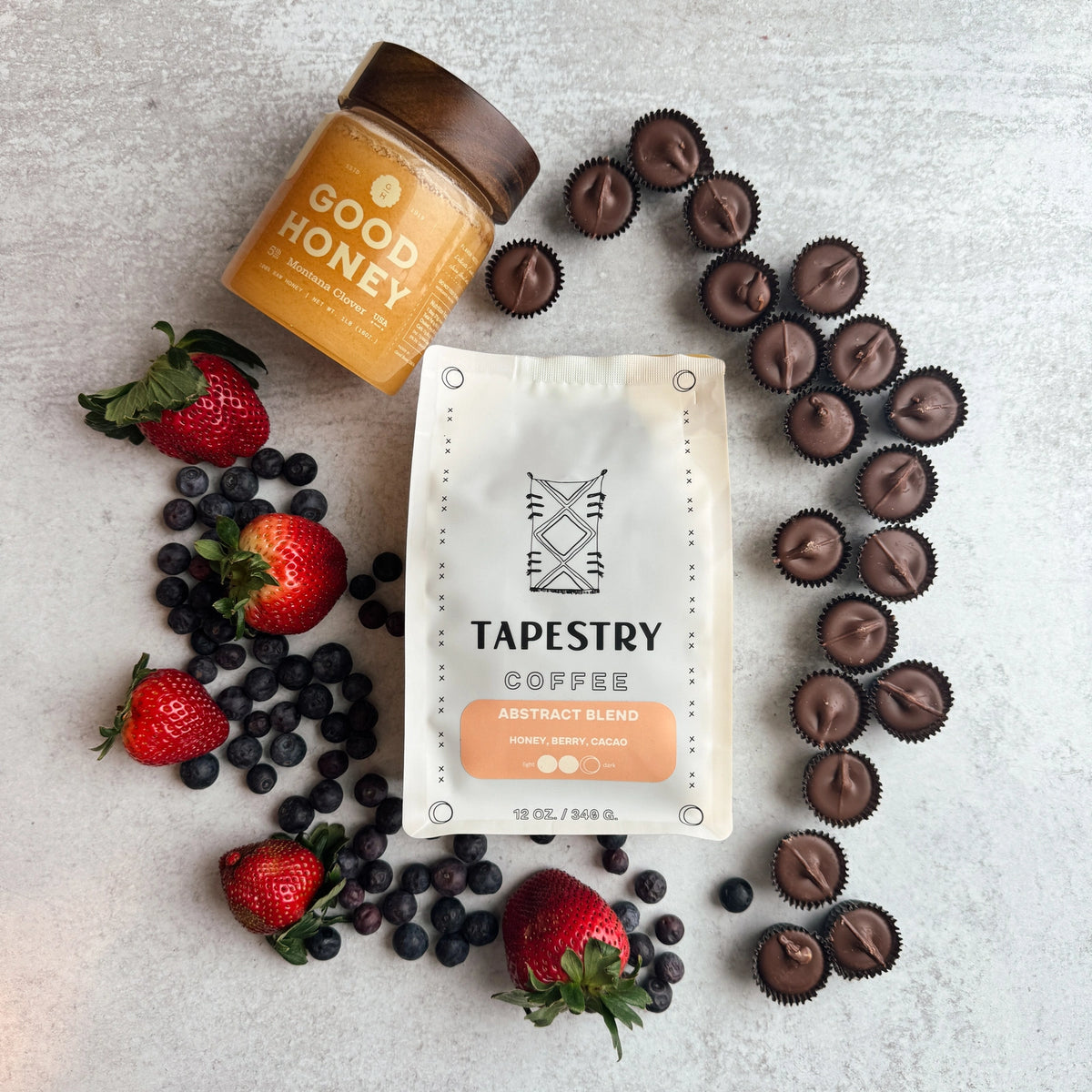
A scale that reads to 0.1 g, a good tamper, a milk pitcher and fresh coffee. We use a distribution tool and a calibrated tamper at the café, and both make your shots more consistent at home. For Breville machines with a 54 mm basket, the Model B tamp fits properly. Fresh beans matter as much as gear: espresso is best about 7 to 21 days after roasting. We print the roast date on the bottom of every bag, and Abstract Blend, with notes of honey, berry and cacao, is the espresso we pull in our cafés.
New to espresso? Start with our guide on how to make espresso at home, then learn how to dial in a new coffee. Our brew guide has a starting recipe too.
Quick Answers
What is the best espresso machine for home use?
For most people, the Breville Barista Express Impress, because it includes a grinder. If you already own a good grinder, the Gaggia Classic Evo Pro is the best value, and the Lelit Mara X V2 is our pick for milk drinks.
Is a $2,000 espresso machine worth it?
Only if you make several drinks a day or want café-level control. Most people get excellent espresso from a $500 to $800 machine paired with a good grinder.
Do I need a separate grinder?
Yes, unless your machine has one built in, like the Barista Express Impress or the Meraki. Espresso needs a very fine, consistent grind that blade grinders and most drip grinders can't make.
What's the difference between a heat exchanger and a dual boiler?
Both let you brew and steam at the same time. A heat exchanger uses one boiler and runs brew water through a tube inside it. A dual boiler has a separate boiler for each, which gives you more exact brew temperature.
What coffee should I use for espresso?
Freshly roasted beans, ideally 7 to 21 days after roasting. A medium roast blend made for espresso, like our Abstract Blend, is the easiest to dial in.
Do you sell espresso machines for cafés?
Yes. If you're opening a coffee shop or adding espresso to a business, see our commercial espresso machines page.


