


Tapestry Coffee BlogCoffee Basics
What Is Coffee Roasting? How Green Coffee Becomes the Beans You Brew

Coffee roasting is the process of heating green coffee seeds until they dry out, turn brown and develop the flavors and aromas we know as coffee. A typical drum roast takes about 10 to 15 minutes. The beans go from green to yellow to brown, pop at "first crack," and are dropped into a cooling tray the moment they reach the roast level the roaster wants.
Before roasting, coffee is a hard, grassy-smelling seed you couldn't brew a good cup from. Roasting is where nearly all of coffee's flavor is created, which is why two roasters can start with the same green coffee and end up with very different cups. Here's what happens inside the roaster, step by step, and how we roast our coffee in St. Paul.
What Happens to Coffee Beans When They Roast?
Heat sets off chemical and physical changes inside the bean:
- Water leaves the bean. Green coffee is about 10 to 12% moisture. Most of it evaporates during roasting, which is why beans lose about 12 to 20% of their weight.
- Sugars and amino acids react. The Maillard reaction and caramelization create the browning and hundreds of aroma compounds: chocolate, nutty, caramel and fruity notes.
- The bean expands and gets brittle. Pressure from steam and gases makes the bean swell and crack, so it can be ground and brewed.
- Carbon dioxide builds up. Roasted beans keep releasing CO2 for days afterward, which is why fresh coffee "blooms" when you pour water on it.
- The papery skin falls off. A thin layer called chaff flakes off and is collected by the roaster.

The Stages of Coffee Roasting
Every roast moves through the same stages. What changes from coffee to coffee is how fast the roaster moves through each one and when they stop.
| Stage | Bean temperature (approx.) | What you see, hear and smell |
|---|---|---|
| 1. Charge | Room temperature | Green coffee is dropped into a preheated drum. |
| 2. Turning point | Probe reading bottoms out | The cold beans pull the temperature reading down. When it starts climbing again, the beans are absorbing heat. |
| 3. Drying | Up to about 300°F | Beans fade from green to yellow and smell like hay or fresh bread. |
| 4. Browning (Maillard) | About 300 to 385°F | Beans turn tan, then light brown. The smell shifts to toast and caramel. |
| 5. First crack | About 385 to 400°F | A popping sound like popcorn as steam bursts out of the beans. |
| 6. Development | About 400 to 435°F | The time after first crack. Sweetness and body build while acidity softens. |
| 7. Second crack | About 435 to 445°F | A quieter, faster crackle. Oils start to reach the surface. Dark roasts finish here or later. |
| 8. Drop and cool | Falling fast | Beans are dumped into a stirring cooling tray so they stop roasting right away. |
Charge and turning point
The roaster preheats the drum, then drops in the green coffee, which is called the charge. A probe in the bean pile reads the temperature. It drops sharply as the cold beans hit it, then bottoms out and starts rising about a minute or two into the roast. That low point is the turning point, or "turnaround," and it tells the roaster how the batch is taking on heat.
Drying
For the first several minutes, the beans are mostly losing water. They turn from green to pale yellow, and the room smells grassy, then like baking bread. Rushing this stage can leave the inside of the bean underdeveloped.
Browning (the Maillard reaction)
Once the beans are dry enough, sugars and amino acids start reacting. This is the same reaction that browns toast and seared steak. Much of coffee's sweetness and body is set here, and the beans darken from tan to cinnamon brown.
First crack
Pressure from steam and gases inside the bean builds until the beans pop open. That audible crack is the most important marker in roasting. Coffee is drinkable from here on, and the lightest roasts end shortly after first crack.
Development and second crack
Everything after first crack is development time. A little more time adds sweetness and rounds out acidity. A lot more time brings out roasty, bittersweet flavors and eventually second crack, when the bean's structure starts to break down and oils rise to the surface.
Drop and cooling
Beans keep roasting from their own heat, so timing the drop matters. The roaster dumps the coffee into a cooling tray with a fan and stirring arms, which brings it to room temperature in a few minutes and locks in the roast.

How Heat Gets Into the Bean
Roasters use three kinds of heat transfer:
- Conduction: heat passed directly from the hot drum to the beans touching it.
- Convection: hot air moving through the drum and around the beans.
- Radiation: heat given off by the hot drum walls and the beans themselves.
Most drum roasters use a mix of all three. Our Mill City roasters lean on conduction and convection, and we control the gas and airflow throughout each roast to steer how fast the coffee moves through each stage.
How Roasting Creates Light, Medium and Dark Roasts
Roast level comes down to when the roaster stops. Light roasts are dropped soon after first crack and taste more like the farm and the coffee's origin: brighter, fruitier, more floral. Medium roasts finish between first and second crack, balancing origin flavor with sweetness. Dark roasts go to second crack or beyond, where roast flavors like dark chocolate and smoke take over.
We go deeper on each level, and what to brew with it, in What Does Roast Level Really Mean?
How We Roast Coffee at Tapestry
We roast in small batches in St. Paul and run our roasters by hand. Our formula is simple: great green coffee, plus the right heat and time. That's why we put so much work into sourcing our green coffee before it ever reaches the roaster.
- Data plus a person: software tracks bean temperature and rate of rise on every batch, but a roaster is at the machine the whole time making adjustments. Every roaster behaves a little differently, and experience matters.
- We taste everything: we cup (professionally taste) our coffees to dial in each roast profile and keep it consistent batch to batch.
- We measure roast color: we check roast level with an Agtron light reflectometer, an objective measure of how dark the coffee is. A higher number means a lighter roast.
- We print the roast date on the bottom of every bag, so you always know how fresh your coffee is. Read more on how to read a coffee bag label.
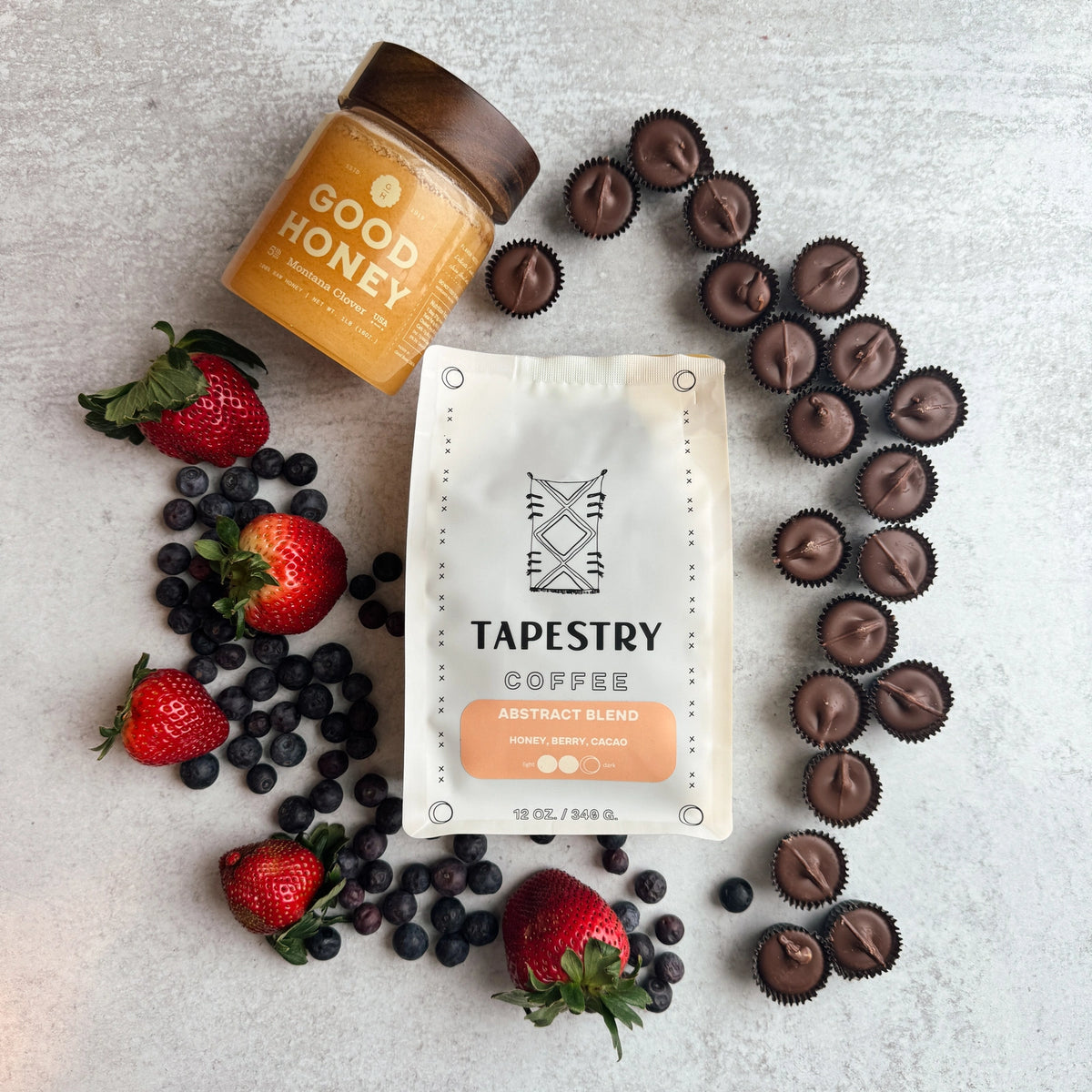
Every coffee on our site lists its roast level and tasting notes. Loom Blend is our everyday medium roast with nutty, toffee and chocolate notes. Abstract Blend is a medium roast with honey, berry and cacao that we use for espresso. Fringe Blend is our dark roast. Not sure which fits you? Take our coffee quiz or try a few with the Coffee Sampler.
What Happens After Roasting?
Freshly roasted coffee is still releasing CO2, and many coffees taste best after a few days of rest. See Can Coffee Be Too Fresh? From there, flavor slowly fades as the coffee meets oxygen, so buy whole beans, grind right before brewing and store them well. Our guide to storing coffee beans covers how.

Quick Answers
What is coffee roasting in simple terms?
It's cooking green coffee seeds with heat until they turn brown and develop flavor. Without roasting, coffee beans are hard and grassy and won't brew a good cup.
How long does it take to roast coffee?
Most drum roasts take about 10 to 15 minutes, plus a few minutes in the cooling tray. Lighter roasts finish sooner, darker roasts later.
What is first crack in coffee roasting?
First crack is the popping sound beans make around 385 to 400°F as steam and gases burst out. It marks the point where coffee becomes a light roast.
Are all coffee beans roasted?
All coffee you brew is roasted. Green coffee is sold unroasted to roasters and home roasters, but it can't be brewed into regular coffee until it's roasted.
Does roasting change how much caffeine is in coffee?
Very little. Caffeine holds up well to heat, so light and dark roasts have about the same caffeine by weight. More in how much caffeine is in coffee.
Why do roasted beans weigh less than green beans?
Roasting drives out water and burns off some organic material, so beans lose about 12 to 20% of their weight. Darker roasts lose more.
Where is Tapestry Coffee roasted?
We roast all of our coffee in small batches in St. Paul, Minnesota, and serve it at our two Lakeville cafés. Learn more about us as a Minnesota coffee roaster.


