


Single Origin vs. Blend Coffee: What’s the Difference?

Single origin coffee comes from one place, like one country, region, farm or cooperative. A blend combines two or more coffees from different places. Single origins show off the unique flavor of where they were grown and change with each harvest, which makes them great for pour over and for drinking black. Blends are built for balance and consistency, so they taste the same all year and work especially well for espresso, milk drinks and everyday drip coffee. Neither one is automatically better. It depends on how you brew and what you like.
Jump to: side-by-side comparison · what single origin means · why roasters blend · common myths · which to choose · quick answers
Single Origin vs. Blend at a Glance
| Single origin | Blend | |
|---|---|---|
| What it is | Coffee from one country, region, farm or cooperative | Two or more coffees from different places, combined |
| Flavor | Distinct and specific, shows off where it was grown | Balanced and rounded |
| Consistency | Changes with each harvest, often seasonal | Built to taste the same year-round |
| Best for | Pour over, drinking black, exploring flavors | Espresso, lattes, drip, cold brew |
| Availability | Limited, comes and goes | Usually always available |
| Price | Often a little higher, especially farm lots | Usually a little lower |
What Does Single Origin Coffee Mean?
"Single origin" just means all the coffee in the bag comes from one place. But that place can be big or small:
- Country: like "Colombia" or "Ethiopia." The broadest kind of single origin.
- Region: like Huila in Colombia or Huehuetenango in Guatemala. More specific, with a more distinct flavor.
- Farm, cooperative or washing station: like Kayon Mountain Farm in Ethiopia or the CODECH cooperative in Guatemala. You can trace the coffee back to the people who grew it.
- Microlot: a small batch from one part of a farm, one variety or one processing method, separated out because it tastes special. Microlots are usually the most unique and the most limited.
The more specific the origin, the more the coffee reflects its exact growing conditions: altitude, soil, climate, variety and processing. That's why two single origins from the same country can taste completely different. See how origin changes flavor in our guides to Ethiopian, Colombian, Guatemalan, Mexican and Honduran coffee.
Because coffee is a crop, single origins are seasonal. When a harvest sells out, that coffee is gone until next year, and the next harvest may taste a little different. See our guide to coffee seasonality.
Why Do Roasters Make Blends?
A good blend isn't leftover beans thrown together. Roasters build blends on purpose, for a few reasons:
- Balance: combining coffees can create a flavor no single coffee has. A bright, fruity coffee and a chocolatey, full-bodied coffee together can taste sweeter and more complete than either one alone.
- Consistency: single origins change every harvest. With a blend, the roaster can swap in new coffees as seasons change and adjust the recipe so it keeps tasting the same.
- Espresso and milk: espresso concentrates every flavor, so a well-balanced blend usually makes a sweeter, more forgiving shot that holds up to milk.
- Availability: blends can be on the shelf all year, so your favorite coffee doesn't disappear.
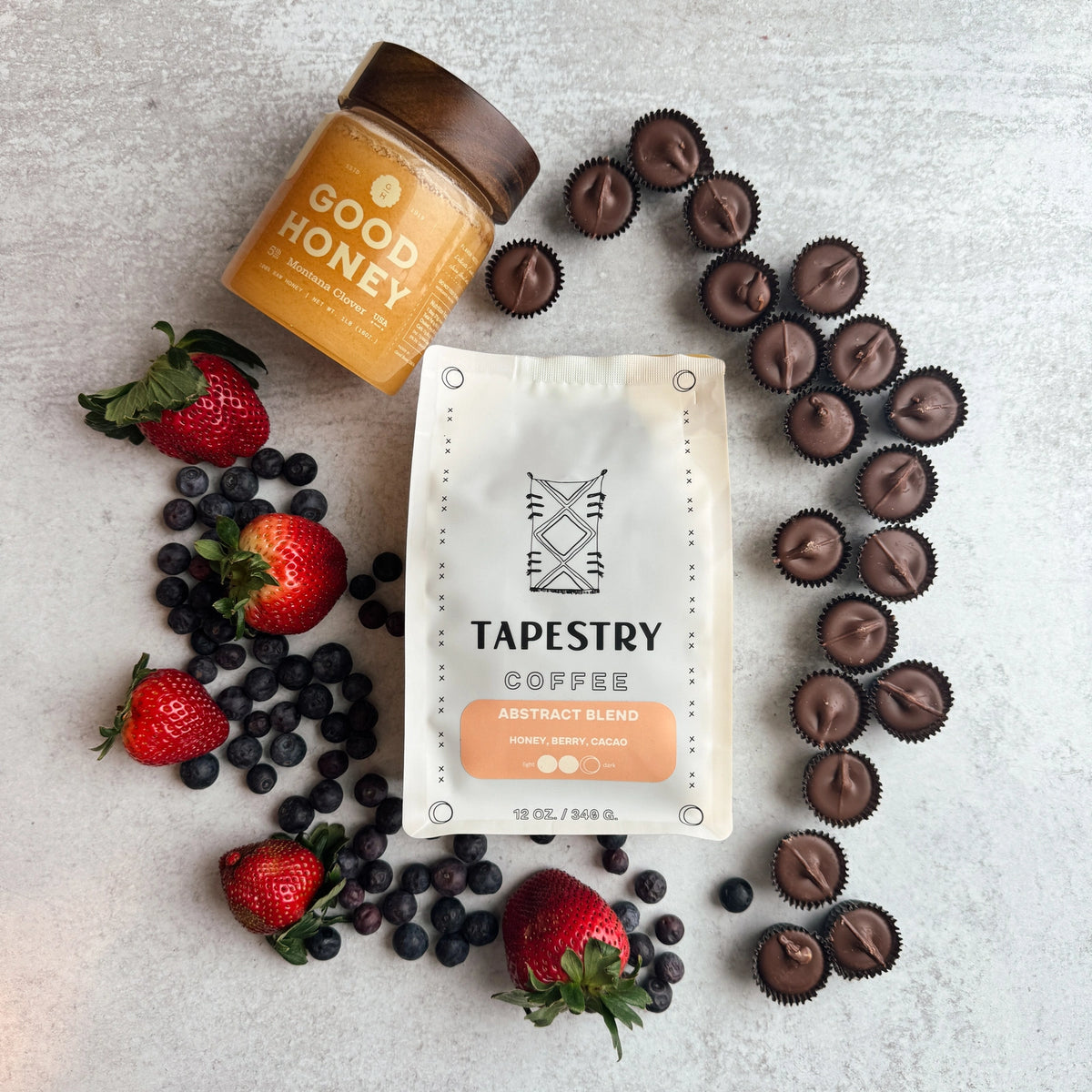
Our Abstract Blend is a good example. It pairs a natural Ethiopian from Guji, which adds berry brightness, with a Colombian from Huila, which adds sweetness, body and cacao. Together they make a balanced espresso with notes of honey, berry and cacao that works black or in a latte.
Common Myths About Single Origins and Blends
"Single origin is always better."
Not necessarily. Single origins are more unique, but a great blend can taste better than a mediocre single origin, especially as espresso or with milk. Quality depends on the green coffee and the roasting, not just whether it's blended.
"Blends are made from cheap coffee."
Some grocery store blends are, but specialty blends are built from high-quality coffees chosen to work together. The coffee in a good blend is often the same quality as a single origin.
"Single origin coffee is stronger."
Strength comes from how much coffee you use and how you brew it, not whether it's a single origin or a blend. A single origin may taste more intense or more fruity, but it doesn't have more caffeine. See coffee brew strength.
Single Origin or Blend: Which Should You Choose?
| If you... | Try |
|---|---|
| Drink your coffee black and like to taste the details | Single origin |
| Brew pour over or Chemex | Single origin |
| Like trying something new every bag | Single origin |
| Make espresso, lattes or cappuccinos | Blend |
| Want the same great cup every morning | Blend |
| Use a drip machine or make big batches | Blend |
| Make cold brew | Either. Chocolatey blends are smooth, fruity single origins are juicy |
Still not sure? Try both. Our Coffee Sampler is an easy way to taste a few side by side.
Our Single Origins and Blends
We roast every coffee to order in small batches in St. Paul and print the roast date on the bottom of every bag.
Single origins
- Ethiopia Natural Guji from Kayon Mountain Farm: strawberry jam, elderflower and grapefruit. Best as a pour over.
- Guatemala Washed Huehuetenango from the CODECH cooperative: peanut brittle, blackberry jam and demerara sugar. Great as a pour over or daily drip.
- Roaster's Choice: a different coffee every two weeks, hand-picked by our roasting team, including some exclusive coffees.
Browse all of our single origin coffees.
Blends
- Loom Blend: washed coffees from Mexico, Colombia and Ethiopia. Chocolate, toffee and nutty depth. The drip coffee we pour every day at our Lakeville coffee shops.
- Abstract Blend: Colombia and Ethiopia. Honey, berry and cacao. The espresso behind every latte we make.
- Fringe Blend: natural Honduras and washed Mexico. A smooth, modern dark roast with big chocolate and no burnt bite.
Browse all of our coffee blends, or take our 60-second coffee quiz to find your match.
Quick Answers
What is the difference between single origin and blend coffee?
Single origin coffee comes from one place, like one country, region or farm. A blend combines coffees from two or more places for balance and consistency.
Is single origin coffee better than a blend?
Not always. Single origins are more distinct and are great for pour over and drinking black. Blends are more balanced and are usually better for espresso and milk drinks.
Why is single origin coffee more expensive?
Single origins, especially farm lots and microlots, are often produced in small amounts and carefully separated, which costs more. Blends can use a wider range of coffees.
Is single origin coffee good for espresso?
It can be, especially if you like a bright, fruity shot. But many people find blends make a sweeter, more balanced espresso, especially with milk.
Why do coffee shops use blends for espresso?
Blends are balanced, forgiving and consistent, so every latte tastes the same from week to week, even as harvests change.
What is a microlot?
A small batch of coffee from one part of a farm, one variety or one processing method, kept separate because it tastes special.
Do blends taste the same all year?
That's the goal. Roasters adjust the coffees in a blend as harvests change so it keeps the same flavor.
What is a house blend?
A coffee shop or roaster's signature everyday blend. Ours is Loom Blend, the drip coffee we pour every day.
Is single origin coffee stronger?
No. Strength depends on how much coffee you use and how you brew it. Single origins may taste more intense, but they don't have more caffeine.


