



How to Build a Coffee Shop Menu That Actually Works
Most coffee shop menus are too long. That's the honest take after running a shop ourselves.
When you're opening, it feels like more options equals more customers. But a long menu creates problems at almost every level. Harder to train staff, harder to manage inventory, harder for customers to decide what to order. Decision paralysis is real. When someone stands at the counter scanning 40 items, they stress out, default to something safe, and leave without trying the thing that would have made them a regular.
A focused menu does the opposite. It makes your bar easier to run, your team easier to train, and your customers easier to serve. And it forces you to be intentional about every single drink you put on it.
Here's how to think through building one.
Start with the coffee, not the drinks
Every drink on your menu is only as good as the coffee underneath it. Before you think about seasonal specials or signature lattes, you need to know what's in your hopper and how it behaves.
Your espresso blend is the foundation of most of your menu: lattes, cappuccinos, cortados, americanos. If it's inconsistent, bitter, or poorly matched to your equipment, no amount of creative drink-building fixes that. This is why choosing the right wholesale coffee roaster matters as much as anything else in your buildout. A good roaster helps you dial in your espresso, trains your staff, and stays involved as your program evolves. A bad one ships you coffee and disappears.
If you're still evaluating roasters or thinking about making a switch, we offer free samples to coffee shop owners. We'll learn about your setup and send the right coffees for your program. Request a free sample here.
Build the core menu first
Start with the drinks every coffee shop needs to have. These are the items your customers will order on autopilot and the ones your staff need to execute perfectly every single time.
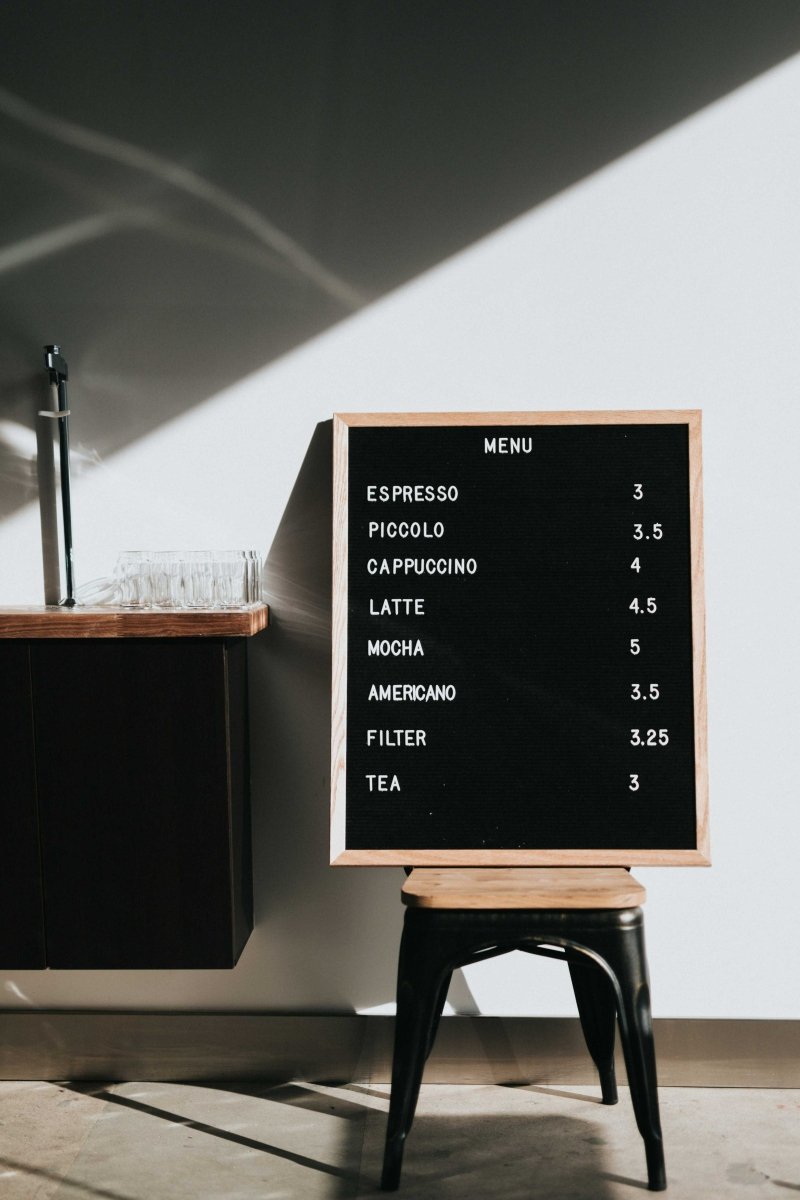
For most shops that looks something like this: drip coffee, americano, latte, cappuccino, cortado, and a cold option like an iced latte or cold brew. Add a non-coffee option or two — a tea latte, a matcha, a steamer for kids. That's a complete menu. It covers the full range of what most customers want without overwhelming anyone.
Resist the urge to add more at this stage. Get these right first.
Add a small section of house specials
Once your core menu is solid, this is where you get to have some fun. A small section of house specials, three to five drinks, gives you a place to put your personality on the menu and gives customers a reason to come back and try something new.
These are the drinks you'll become known for. At Tapestry, one of ours is the Bourbon Caramel Latte. It's our all-time best seller. Customers come in specifically for it, they tell their friends about it, and it shows up in reviews. It exists because we gave ourselves a small sandbox to experiment in rather than trying to make every drink on the menu a signature.
Keep this section tight. Three to five drinks max. Rotate seasonally if you want, but always keep your anchor specials on the menu year round — the ones that have built a following.
Price for sustainability, not just competition
Pricing is where a lot of shop owners get into trouble. The instinct is to look at what the coffee shop down the street charges and match it. That's the wrong starting point.
Start with your actual costs: coffee, milk, syrups, labor, overhead. Work forward to a price that keeps the business healthy, then check it against the market. If you're priced significantly higher than everyone around you, you need to either justify that with quality or adjust. But if you're pricing below what the business needs to survive because you're afraid of charging fairly, that's a problem that compounds over time.
Good coffee costs money to source and make properly. Customers who value quality understand that.
Keep the menu easy to read
Once you have your drinks dialed in, how you present them matters. A few things that actually help:
Keep categories simple and obvious. Espresso drinks, cold drinks, non-coffee, house specials. Customers shouldn't have to think about where to look.
Write short descriptions where they help. Not every drink needs a description, but for house specials or anything with an unfamiliar ingredient, one sentence goes a long way.
Don't list every possible milk alternative and modification in the menu itself. Train your staff to offer those options when someone orders. Cluttering the menu with asterisks and footnotes makes everything harder to read.
Revisit it regularly
A menu isn't permanent. Look at what's selling and what isn't every few months. Pull items that aren't moving. If something never gets ordered, it's costing you in inventory and cognitive load for your staff.
Seasonal specials are a good way to test new drinks without committing to them permanently. If a seasonal item consistently outsells your core menu, consider making it permanent. If it gets ignored, let it go.
The coffee your menu is built on matters
You can have a beautifully designed menu with creative drink names and smart pricing, but if the espresso pulling through your machine isn't right, everything else suffers.
If you're building a new coffee program or thinking about switching roasters, start by trying the coffee. We work with coffee shops, bakeries, restaurants, and offices across Minnesota and ship anywhere in the US. We roast to order, offer training and menu support, and stay involved as your business grows.
Request a free sample and we'll reach out to learn about your shop and send the right coffees for your program.
Or if you're ready to talk through a full partnership, get in touch here.